
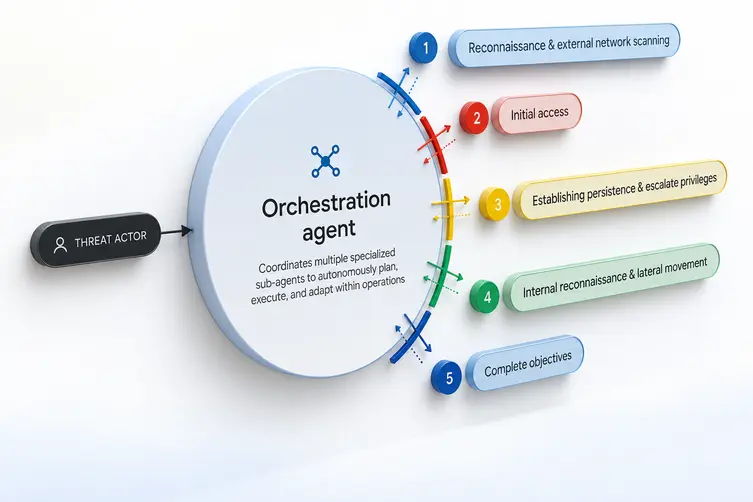
Heads up: researchers at a big tech company found crooks swapping their pokey human keyboards for zippy AI agents that can write, chain, and run exploits almost on autopilot. This isn’t your grandpa’s copy-paste exploit anymore — attackers are using autonomous multi-agent toolkits to move faster, do more, and make defenders feel like they’re trying to swat bees with a ladle.
Autonomous agents doing the dirty work
Open-source offensive frameworks are the new hobby tools in the attacker toolkit. These multi-agent systems can break an intrusion into tiny steps, hand off jobs to specialized agents, and keep going without someone babysitting them. The result: operations that happen at machine speed, and scale in ways that make incident responders jealous… in the worst way.
What these toolkits do, in plain (accusatory) English:
- Automate reverse engineering of patches using differential analysis — so attackers can spot what changed and turn that information into a working exploit fast.
- Chain multiple attack phases automatically, so foothold → privilege escalation → lateral movement looks like a conveyor belt.
- Use inference services and agent platforms to route tasks, dynamically generate tools, and even execute code without constant human oversight.
Weaponized patches, stolen model access, and cheesy phishing panels
Two big trends to be mildly terrified about: the shrinking window between a patch being published and criminals weaponizing it, and attackers going after AI infrastructure itself. Automated pipelines driven by large language models are being used to turn patch diffs and release notes into proof-of-concept exploits in record time, compressing the old “discover → research → exploit” timeline.
On top of that, bad actors are stealing LLM credentials and cloud resources to run these operations, a practice dubbed LLMjacking. Stolen model access — plus cheap resale of compromised cloud accounts — lets them scale up without paying cloud bills, and underground markets make it easy to buy access or proxy services.
Finally, watch out for the rise of next-level phishing: crime-as-a-service platforms now sneak LLM chatbots into their control panels so nontechnical buyers can customize lures with natural language. Low-skilled affiliates can spin up convincing campaigns simply by chatting with a bot — which means more phish, faster.
- Risks: rapid exploit weaponization, stealthier campaigns, commoditized access to LLMs and cloud compute.
- Quick defenses: prioritize patching high-risk systems, monitor for unusual model usage or credential exfiltration, and treat phishing templates as code that needs access controls and reviews.
If nothing else, take comfort in one immutable truth: attackers will keep automating, and defenders will keep grumbling — then automate back. Keep your observability sharp and your patches earlier than yesterday.