
The chaos in plain English
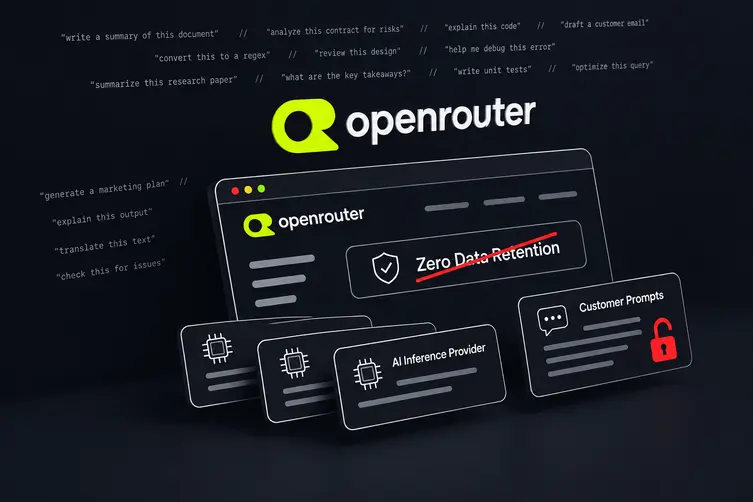
Okay, picture this: researchers sprinkle millions of fake prompts into the AI wild, each stuffed with a unique secret link or fake credential — a tiny, digital tripwire. Months later, some of those tripwires turned up being used by strangers. The result? A big messy discovery that several AI inference hosts were quietly swallowing and sharing requests customers assumed were private. Worse, some of the flagged prompts were marked Zero Data Retention, the setting everyone told themselves meant “nobody keeps this.” Spoiler: not true, at least not everywhere.
The gateway service that routes customers to third-party model hosts reacted by cutting three providers from its pool, blocking 125 endpoints from qualifying for the privacy setting until they can prove they’re clean, and alerting users who might be affected. The gateway itself wasn’t breached — the attackers were sneaking or scraping data from the upstream hosts, sometimes right when requests first arrived.
How it happened (and what to do about it)
Researchers had been planting canary-style prompts between July and November. If anyone used one of the planted secrets, boom — they knew a human or system had read the prompt. The patterns were telling:
- One big hit involved a few hundred AWS keys planted in single requests during short windows. Those windows matched bursts of activity where the attacker immediately tested keys, listed buckets, poked Secrets Manager and tried to make new credentials. It looked like traffic was being copied at the gateway or ingress point — before a model ever ran.
- At least one attacker seemed to control multiple providers at once from a rented server, and even ran automated tooling to confirm the stolen keys still worked.
- Some sellers on bargain marketplaces were logging requests by default and hoarding whatever passed through. In one case, the person acting like a tiny home-admin on a residential connection manually grabbed passwords and tested keys.
- A host tied to a foreign lab scraped a huge share of seeded prompts (including many that claimed no retention). That scraping showed up in odd activities like a git client trying to clone private repo links and secret links being posted into team chat apps, where employees opened them within minutes.
A few providers later confirmed incidents: one had an inference server taken over briefly, another found someone downloaded stored prompt samples after a separate credential leak, and another admitted routing misconfigurations had forwarded prompts where they weren’t supposed to go. Some of the affected endpoints haven’t publicly posted details, but customers were notified.
If you want the short, practical takeaway: a privacy flag usually only protects the first hop. If your request passes through a router or reseller you didn’t choose, that intermediary can read or forward the prompt. The cheapest route is often the dirtiest.
- Rotate any exposed keys, tokens, or passwords immediately after suspicion or notification.
- Prefer direct connections to a first-tier provider or, better yet, go with self-hosting if you can — that’s the only way to guarantee no third party reads your prompts.
- Pick your upstream providers explicitly instead of relying on a pooled marketplace, and verify that privacy flags actually change network paths.
- Plant simple tripwires (free canary tokens or fake credentials) in non-production requests — if anyone touches them, treat it as an incident.
- Strip obvious credential shapes from prompts automatically (though remember this won’t catch everything that looks secret-y).
Long story short: treat privacy flags as one piece of the puzzle, not a magic cloak. Be choosy about who sees your data, monitor for odd access, and rotate credentials like you mean it.