
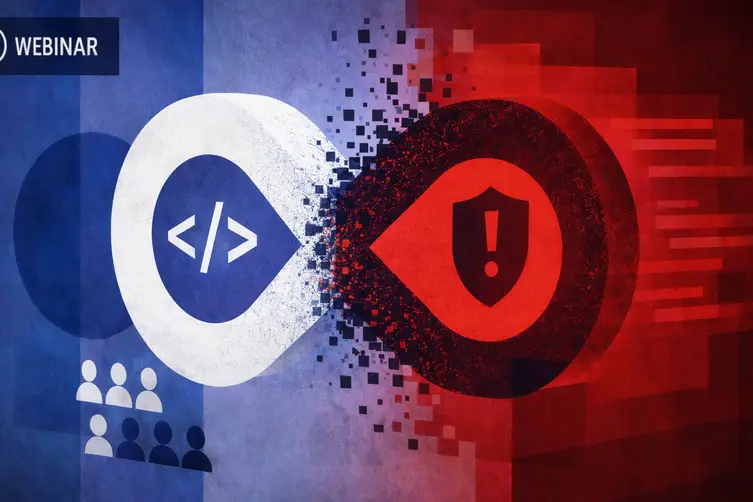
AI is turning developers into code-generating machines (and that’s both awesome and terrifying)
Imagine your team suddenly producing 10 to 50 times more code. Party time for product managers, panic time for security. The good news: faster delivery. The bad news: a whole avalanche of components, dependencies, and vulnerabilities landing on security’s desk. If you treat this like the old days—scan, queue, fix—you’ll either become the team’s bottleneck or wave goodbye to production safety.
What used to be a steady trickle of findings is now a firehose. Attackers get smarter (and also have AI), so the surface you need to defend is growing while review capacity stays stubbornly human. The real question is: how do you keep shipping at machine pace without inviting machine-scale risk?
Make security move at machine speed (without turning the org into chaos)
Short answer: don’t try to manually review everything. Long answer: redesign the way security operates so it fits modern development, not the other way around. Here are practical ideas to get you started.
- AI-speed controls — Bake security checks into the developer workflow so issues are caught early, not piled into a backlog.
- Shift-left on steroids — Move automated policy enforcement into editors, CI, and build pipelines so human review focuses on the risky, nuanced stuff.
- Risk triage that actually scales — Use smarter prioritization (contextual risk scoring, usage telemetry, exploitability) so teams fix what matters first.
- Dependency hygiene — Automate dependency vetting and updates; don’t wait for someone to remember the library is two versions behind and haunted by CVEs.
- Secure-by-default templates — Give devs safe starters so the most common mistakes are already handled before code is ever committed.
- Guardrails, not handcuffs — Implement automated gates that block obviously dangerous changes while still letting productive teams move fast.
- Clear ownership and governance — Define who accepts risk, how much exposure is tolerable, and how those choices are reported up the chain.
Don’t forget the social part: developers, security, and execs need a common playbook. Security can’t be the department of “no” — it needs to be the team of “fast and safe.”
There’s no one-size-fits-all magic trick here. But moving to automated, context-aware controls and improving governance gives you a fighting chance to keep pace with development without turning ship day into panic day.
Want to dive deeper? There’s a webinar called “The True Cost of Building at Machine Speed” that walks through these ideas, shows where classic CVE-driven processes stumble, and outlines practical guardrails you can apply right away. Watch it if you want frameworks and real-world examples for securing AI-driven development before the speed gap gets embarrassing.
Final thought: slowing developers down is tempting but pointless — make security fit the new reality so you can laugh at your future backlog, not weep into it.