
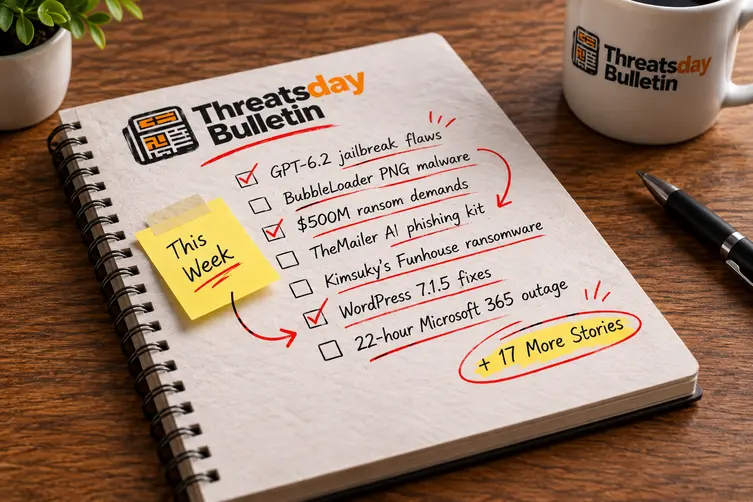
Welcome to the weekly chaos report: where the tiny, boring things you ignore — an email, a plugin, a PNG file — team up with modern rocket-fuelled AI and make everyone’s Monday slightly worse. Expect equal parts clever hacks, dusty old scams, and machines getting smarter at being annoying.
AI and the arms race (with a side of eyebrow-raising)
AI keeps upgrading like a videogame character who refuses to stop collecting power-ups. New frontier models promise faster reasoning and better code hardening, while fresh releases claim improved defensive chops. At the same time, researchers found ways to poke and prod these systems until they spill secrets or follow sketchy instructions — basically teaching them to misbehave faster than you can say “patch this.” Think less sci-fi takeover and more “your phishing email now has a stylist.”
- New models show big jumps in speed and code-smarts, which is great for defenders — until someone figures out the shortcuts to make them misbehave.
- There were reports of a universal exploit technique that reduced the effort needed to jailbreak a pre-release model — a reminder that even the shiny new AI toys have weak spots.
- An industry experiment is embedding independent evaluators inside labs to pry into safety practices — useful, but not a magic spell. The reviewers get access to internal artifacts but their reports can be limited by confidentiality.
- Crimeware vendors are using AI to catalog stolen computers into searchable, detailed profiles, making harvested data feel like an online store — creepy and efficient.
- A new AI-powered phishing kit can test messages, rewrite them until they slip past filters, and optimize lures for individual mail providers — yes, the spam is now tuning itself.
Quick highlight: remember AI jailbreaks — they’re not just headlines; they change how quickly an exploit can go from curious researcher to active threat.
Ransomware, malware, and the boring things that bite
The old-school threats didn’t retire. They evolved. The usual suspects — ransomware gangs, supply-chain slipups, crafty typosquatters — keep finding new angles, and sometimes the cleverest trick is how normal everything looks.
- Big extortion case: an alleged member of an international ransomware group was extradited to face charges tied to massive ransom demands, showing law enforcement is still chasing the cash flow.
- BubbleLoader is a sneaky loader that hides malicious code inside PNGs, patches legitimate programs at runtime, and uses that disguise to deliver variable payloads — malware dressed up as an innocent image file.
- WordPress pushed an urgent security update. If you run a site, update first and answer questions later — the usual drill.
- A recruitment-style scam is distributing Android spyware via fake job portals targeting defense-industry applicants — pro tip: check the URL, then still check it again.
- A third-party migration vendor breach exposed sensitive customer and staff records pulled from a corporate SharePoint — reminder: your vendors are an extension of your risk profile.
- Typosquatters are snapping up one-letter lookalike domains within a day of real registrations and parking scammy pages behind them — brand protection is now a race against typo-squatting bots.
Also in the background: multinational sanctions against disinformation outfits and multi-year espionage ops that quietly siphoned huge document troves. The takeaway? Some attacks are loud and flashy; others crawl under radar for years.
And yes, don’t forget the weird one: that PNG trick again. If you love details, look into the mechanics — it uses two image blobs and an entry-point patch to decrypt and drop payloads. Not glamorous, but effective; call it the digital equivalent of a Trojan horse wearing sunglasses.
Final thought: the shiniest new tools are headline-grabbing, but the real damage usually starts with something ordinary — a tired admin, an ignored update, a trusted vendor. Keep the basics tight, patch early, and be suspicious of anything that looks perfectly normal.