
Security teams are swamped — alerts, logs, dashboards, and more alerts. Yet when something weird happens, the single most annoying question still takes forever to answer: Who or what is behind this activity, and what can it touch?
The Blind Spot Between Identity and Security Operations
Think of your SIEM and EDR as excellent alarm clocks that scream when something’s off. But they don’t always tell you who set the alarm or whether that person has the master key to the building. A strange login might be a distracted human, a misconfigured service account, or even an AI agent merrily doing automated things with permissions nobody’s audited in months.
Alerts are great for noise; context is where the magic happens. Without identity context, analysts can spot odd behavior but can’t quickly say how dangerous it is, which systems are at risk, or whether taking action will break production.
- Which apps and systems can this identity reach?
- Could an attacker hop from this account to more critical assets?
- How severe is the potential damage?
- Can we disable the account without blowing up a business process?
And yes — the identity universe keeps expanding. Users are just the start. Service accounts, API keys, automated workloads, and autonomous AI agents now join the party, often with broad access and few humans watching.
What a Better SOC Response Looks Like
The goal isn’t more dashboards or extra noise. It’s about giving analysts the right facts at the right time so they can act fast, smart, and without accidentally nuking production.
- Investigate faster: Immediately see whether the activity came from a human, a machine, or an AI agent.
- Understand the real blast radius: which permissions, systems, and lateral paths are in play.
- Contain threats safely: respond to compromised credentials while keeping critical automation running.
- Bridge teams: give IAM and SOC shared workflows, clear escalation routes, and common goals.
If your SOC can connect alerts to identity — who owns it, what it can access, and how far an attacker could go — investigations get shorter and responses get smarter.
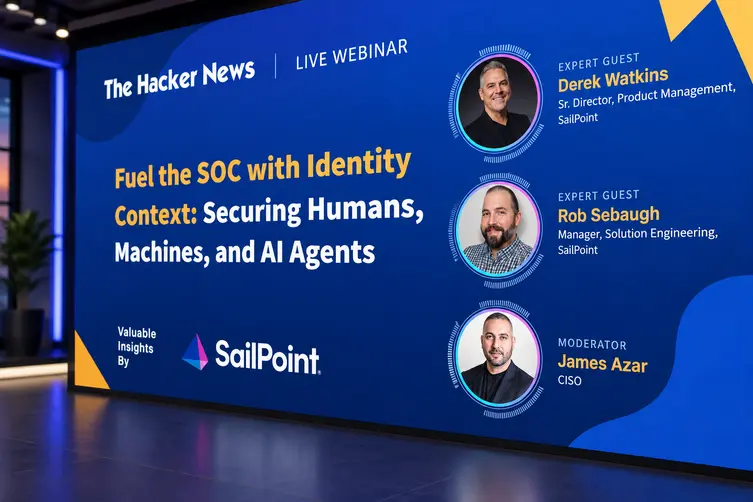
Save your spot: there’s a free webinar covering practical ways to feed identity intelligence into SOC workflows, investigate lateral movement, estimate blast radius, and improve incident playbooks without stopping the business. It’s aimed at teams who want fewer surprises and faster, safer fixes.
Your SOC already has the alerts. Give it the context to act.